
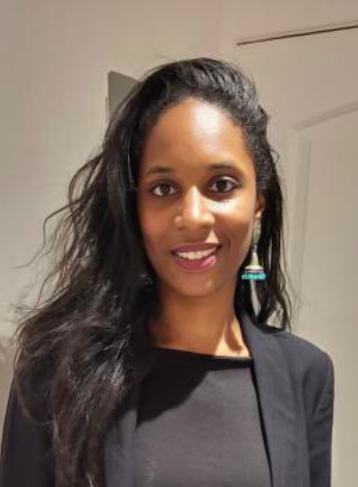
Madina Diallo is a peacebuilding and conflict resolution expert with over 13 years of experience addressing conflict, armed violence, social cohesion and peacebuilding challenges in fragile and conflict-affected contexts. She has worked with international NGOs, UN agencies, governments, civil society organisations and multilateral partners, providing strategic advice and managing programmes addressing conflict prevention, peacebuilding and governance.
Her expertise includes conflict and political analysis, dialogue and mediation, prevention and reduction of armed violence, peacebuilding programme design and management, conflict- sensitive programming, social cohesion and policy engagement. She has worked with communities, civil society organisations, government authorities, security actors and other stakeholders in contexts affected by armed conflict, intercommunal violence and political instability, including initiatives addressing local conflicts, resource-related tensions and relationships between communities and security institutions.
Madina has extensive experience integrating gender and youth perspectives into conflict prevention and peacebuilding, with specialized expertise in the Women, Peace and Security (WPS) and Youth, Peace and Security (YPS) agendas. Her work combines strategic analysis, programme design and delivery, facilitation and capacity strengthening, with a strong focus on locally led, inclusive and conflict-sensitive approaches to preventing violence and sustaining peace. She also has expertise in MEAL, programme learning and evidence-informed programming, applying gender, conflict sensitivity and humanitarian-development-peace nexus perspectives
throughout the programme cycle and using evidence and learning to strengthen programme quality, adaptation and impact.
Madina holds a BA in International Development Studies and a MSc in Political Science (International Relations). She speaks French, English, Fulani and has a good notion of Spanish.
Country experience: Canada, Netherlands, Mali, Niger, Burkina Faso, Côte d’Ivoire, Democratic Republic of Congo, Sierra Leone, Guinea, Chad, Guinea-Bissau